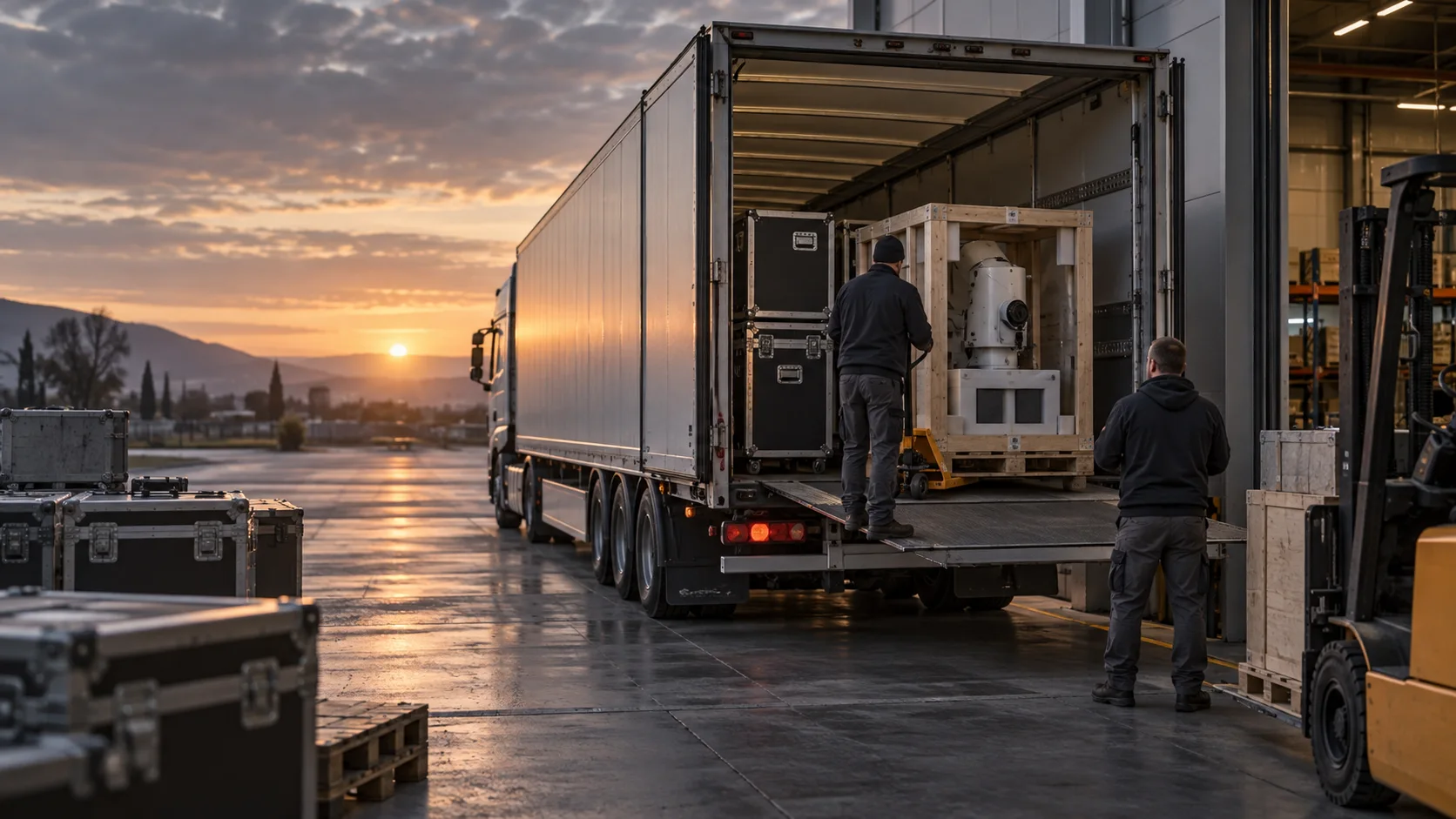
Plan your transport
A one-page brief works well: description of goods, number of packages, external dimensions and weight per package, packaging condition, both addresses with contacts, earliest collection date and latest useful delivery date. Mark estimates as such. Special features such as delicate surfaces, a required transport orientation, restricted access or a fixed presentation slot belong in the first request – not in a phone call the day before. Photos of the packed goods often save several follow-up questions.
A seven-line brief template
1. Goods and purpose, for example a prototype for a customer demonstration. 2. Packages with dimensions and weight. 3. Packaging and handling notes. 4. Collection address, access, contact. 5. Delivery address, access, contact. 6. Earliest collection, latest delivery. 7. Additional services required, such as carrying into the room or return transport. With these seven lines almost any request can be assessed immediately.
What happens after your request
We review the details, clarify open points on access, time window and responsibilities for loading and unloading, and propose a suitable option, such as a direct run without transhipment or a combined tour. You receive a quotation for the agreed scope. Before the order is placed, we record services, dates and any remaining conditions together.
Common gaps in first requests
Include the weight of the heaviest package, whether a loading dock or only the kerb is available at destination, and a reachable contact at the delivery site. Who helps with loading on site is also often left open. If you include these points straight away, you usually get your quotation without a second round.
What matters
- Describe goods, packages and packaging condition
- State earliest collection and latest delivery date
- Mark estimated values clearly in the brief