Plan your transport
Typical cost drivers are a fixed delivery time or narrow window, handovers outside normal hours, several stops, difficult access with stairs or no stopping place, waiting time, and services such as carrying to the final position, packing or taking back empties. A direct run without transhipment commits vehicle and driver to your shipment; a combined tour shares capacity. We give you a specific price as soon as we have the details of your job – with the scope of services itemised rather than a flat rate.
An example with two options
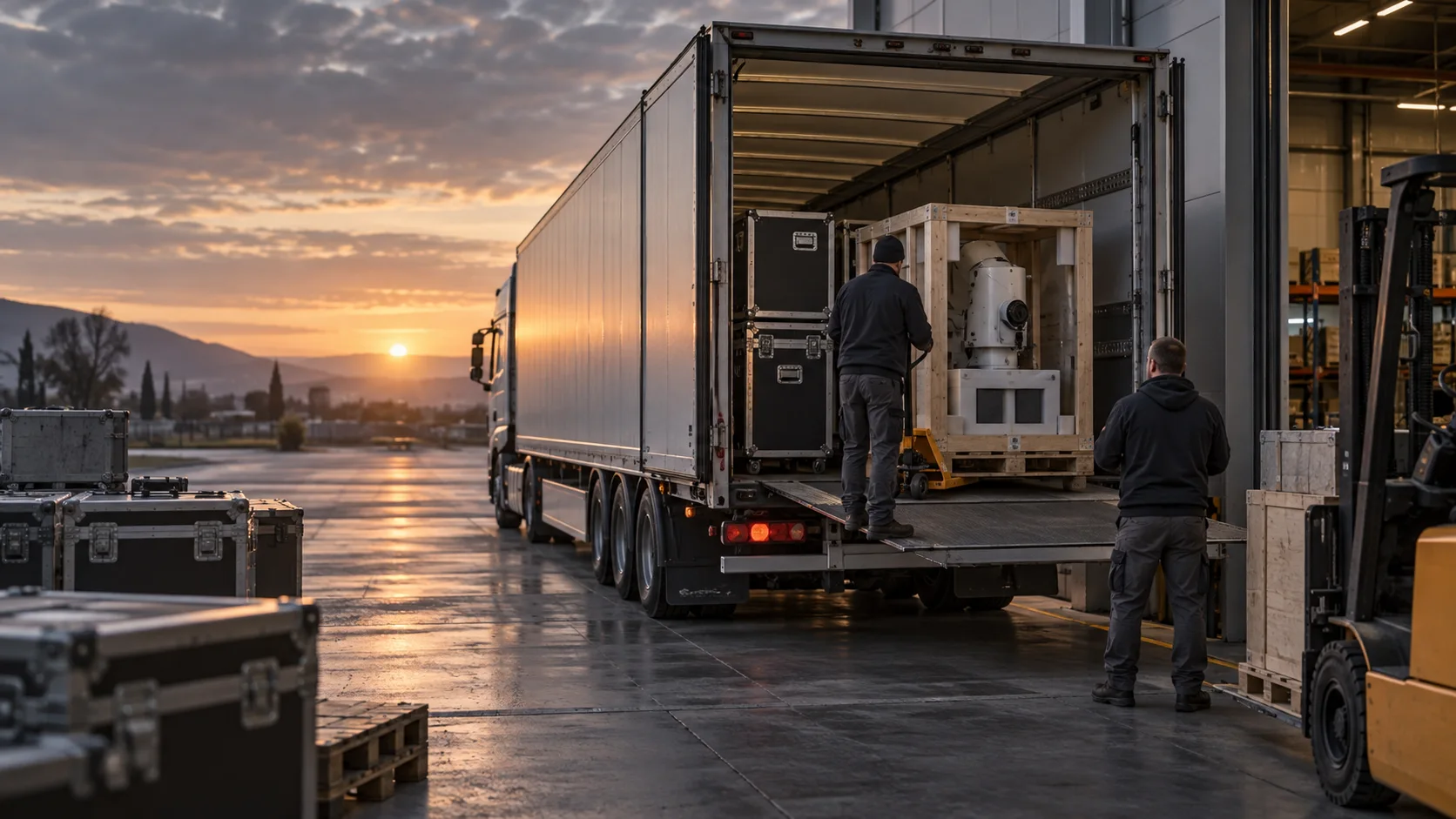
Illustrative scenario without prices: a prototype in a crate, 120 × 80 × 90 cm, is to go from a development site to a customer in another city. Option A: direct run with a fixed arrival time of 9 am, handover in the demonstration room on the 2nd floor. Option B: combined tour with a delivery window of 8 am to 2 pm, handover at goods-in. Option A commits a vehicle exclusively and needs time for the route into the building; option B shares capacity and ends at the dock. Both can be right – depending on what the appointment requires.
What the quotation should show
A transparent quotation shows for each item whether it is included, separate or open: journey and type of run, loading and unloading, waiting-time rule, additional routes in the building, return transport, packaging and empties, and the validity of the quotation. That way you see at a glance what you are paying for.
Planning with costs in mind
A wider time window, a shipment ready at the dock and complete dimensions help avoid extra costs. Where the date is flexible, a combined tour can be cheaper. Where timing or sensitivity is critical, a direct run is more likely to pay off – we show you the difference.
What matters
- Set fixed times and narrow windows deliberately
- Disclose access effort at both locations
- Name additional services separately